
Three measurements that are easy to confuse
Lug width is the distance at the watch case where a traditional band attaches. Band width may describe the width of the band at the case, along the links or at another stated measurement point. Clasp interface size describes the connection between the bracelet and clasp, which can be narrower or use a different geometry.
Ask where each number was measured and whether it is an external dimension, an internal opening or a mating-part dimension. Put the measurement point on a drawing or annotated photograph. Do not copy a number from a listing into a production specification without confirming its reference.
| Area | What to identify | Why it matters |
|---|---|---|
| Watch case / lugs | Lug width, case-side shape, attachment point and clearance | Determines whether the band or end link can meet the case as intended. |
| Band body | Width at the case, taper, thickness and link construction | Affects appearance, assembly and how the band transitions from the case. |
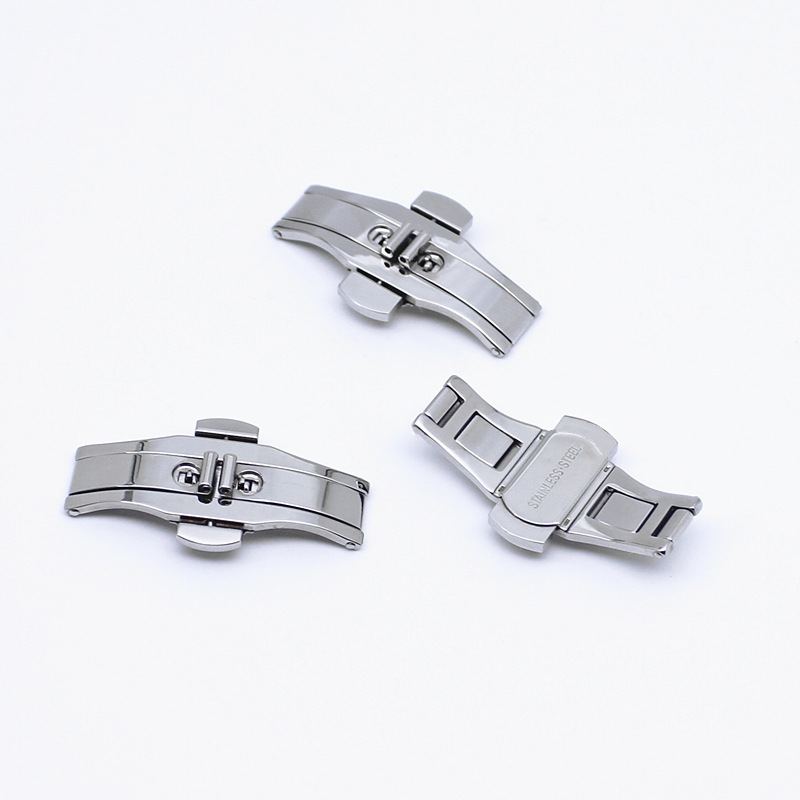
| Clasp | Clasp-side width, mating geometry, pin or link connection and adjustment | A band can fit the case while still failing to mate with the selected clasp. |
End links and connection geometry
A straight end may leave a visible gap or clearance around a case; a curved or fitted end link is shaped around a particular case profile. A model-specific connector may use a dedicated interface rather than a traditional spring-bar arrangement. These are design descriptions, not universal fit rules.
For each connection, confirm the attachment method, end-link profile, insertion direction, clearance, mating surfaces and any moving or locking parts. The selected watch model and connector version should appear together in the specification. If the factory has not confirmed an interface from a sample or drawing, label it as pending review.
Length, thickness and adjustment
Record the intended band length or adjustment range and the way it will be measured. Note whether the two sides have different link counts, whether links are removable and how the clasp position is adjusted. For a development sample, identify the wrist or fit assumptions only as project guidance—not as a general size guarantee.
Thickness should be measured at defined locations because link bodies, end links, hinge areas and clasp components may not share one thickness. Call out any clearance requirement between the band, case and clasp. A top-view width cannot reveal these relationships.
Traditional watches and smartwatches are different checks
Traditional bracelet development commonly starts from the case, lug interface, end link and clasp connection. A smartwatch band may use a model-specific connector or rail interface, and a case-size label may group several devices without proving that their connectors are identical. For any named brand or generation, verify the relevant official compatibility information and still confirm the physical interface for the project.
StrapOEM’s smartwatch page asks buyers to provide the exact model, generation and case size, while its traditional bracelet page emphasizes lug width, case reference and end-link design. Those are useful starting points, not a substitute for a matching sample or drawing.
Why the same stated size may not fit
- The number may refer to different measurement points.
- End links may be straight, curved or model-specific.
- Attachment hardware, pin position or connector geometry may differ.
- Case curvature and clearance may change the interface.
- The band may fit the case but not the selected clasp.
- Different generations or variants may use different connection parts.
A width figure alone is not enough to confirm fit. State the exact reference reviewed and the evidence used for approval.
What to send for a fit review
- Exact watch brand, model, generation and case-size information, if applicable.
- Top, side and underside photographs of the case connection.
- A close-up of the end link or smartwatch connector, with a scale reference.
- A dimensioned drawing showing measurement points and units.
- The existing band or watch sample when fit is critical.
- Band width, taper, thickness and length measurement locations.
- Clasp photographs, clasp-side dimensions and the mating link or pin details.
- Any fixed clearance, visual alignment or movement requirements.
Sample assembly confirmation checklist
| Check | Record before approval |
|---|---|
| Case connection | Correct model, insertion/attachment method, engagement and visible alignment. |
| End link / connector | Profile, gap or clearance, movement, retention and any model-specific features. |
| Band body | Width at stated points, thickness locations, taper, link articulation and removable-link design. |
| Clasp interface | Correct mating parts, opening/closing, retention, adjustment and visual alignment. |
| Reference record | Sample ID or revision, drawings used, open issues and written approval status. |
Approval should identify the exact sample and specification reviewed. If a dimension was not measured, do not describe it as approved merely because the assembled photograph looks correct.
Need a fit-sensitive review?
Send the exact watch model, connection close-ups, dimensions or a physical reference. We can then identify what needs confirmation for the selected project.