
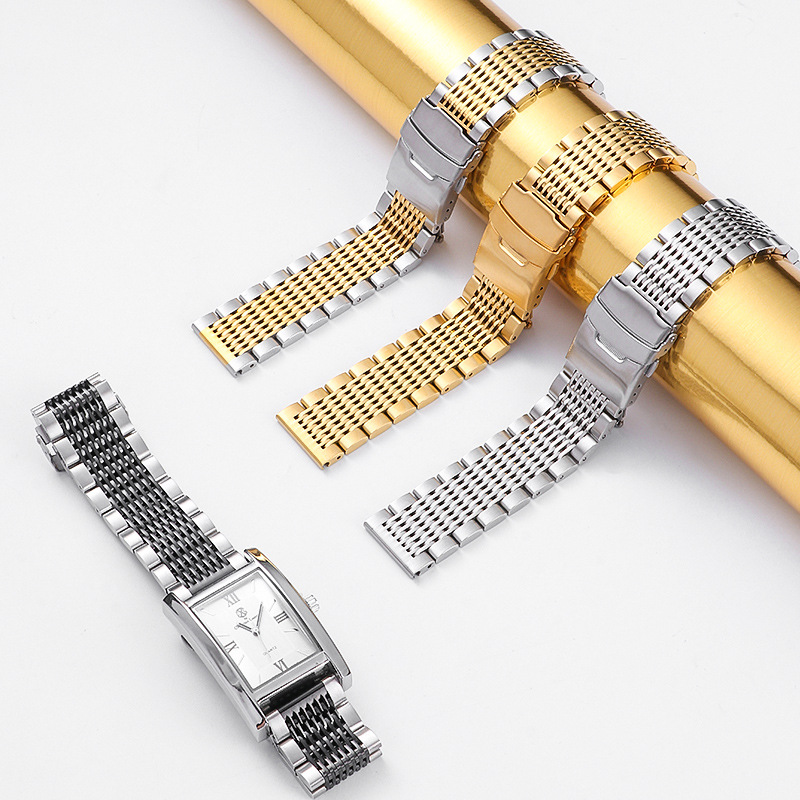
1. Start with a useful product reference
A product reference can be a clear photograph, an existing band, a drawing, a CAD file or a catalog reference. Tell the supplier whether you want to reproduce the structure, borrow the visual direction or develop a new design. Mark the details that must stay unchanged and the details you are willing to revise.
For a sample, note whether it is a golden sample, a competitor reference or a band currently used in your collection. For an image, include multiple views when possible: top, underside, clasp open, connector and any logo area. One attractive angle rarely shows the information needed for fit or construction.
2. Identify the watch and its connection
State the exact watch model, generation or case reference when one exists. For a traditional watch, provide the lug width and case-side interface details. For a smartwatch, include the model and case-size information, but do not assume that a case-size label alone proves connector compatibility.
Useful attachments include a dimensioned drawing, a close-up of the connection, a photo with a scale reference and the physical watch or matching sample when available. If the end link, connector or clasp interface is model-specific, say so explicitly.
3. Separate material from color and surface finish
Material, color and surface finish are different specification fields. “Silver” describes an appearance; it does not identify a material grade or a finishing process. “Black” does not by itself confirm PVD, plating or any other method. Ask the supplier to confirm the selected material and finishing method for the project in writing.
Stainless steel grades vary by product. State the grade you require if it is known, or ask which material options are available for the selected structure. For a visual target, attach a physical or visual reference and identify brushed, polished, mixed-surface or other areas separately.
4. Define clasp, logo and packaging requirements
Describe the preferred clasp type and what needs to be reviewed: appearance, opening and closing, adjustment, logo placement or another functional point. Logo requests should include editable artwork, marking location, orientation and approximate size. Final artwork placement and method remain subject to project review.
Packaging can change the quotation scope. Specify individual protection, inner boxes, labels, barcodes, instruction cards and master-carton requirements if relevant. If packaging artwork is not ready, state that it is pending rather than leaving the requirement implicit.
5. Give quantities by style and color
Provide the expected total quantity and the split by style, connector, size, material or color. A single total can hide several production requirements. If the quantities are not final, give a planning range and label it as provisional.
Custom sample quantities, production quantities and standard-stock inquiries may be treated differently. Starting quantities depend on the selected style and customization. Confirm the order unit and permitted variant mix in the quotation.
6. Explain sampling, timing and delivery needs
Say whether you need a feasibility discussion, a sample, a revised sample or a production quotation. Include your desired launch or delivery date as a planning target, not as an assumed commitment. Ask for the project-specific timing after the specification is reviewed.
State the destination, preferred shipping arrangement and any document or packaging requirements. Freight, duties and taxes should be confirmed rather than assumed. If a date is critical, explain which milestones are fixed and which can move.
7. What if the information is incomplete?
Start with what you have. A clear reference image, exact watch model and target quantity can begin the conversation. List the unknowns openly: “end-link drawing not available,” “material grade to be discussed” or “packaging artwork pending.” This lets the supplier identify the next evidence needed instead of filling gaps with assumptions.
For fit-sensitive projects, the next step may be a physical sample, annotated photo or drawing review. Treat that exchange as specification development, not as an approval of dimensions that have not been checked.
Copyable English inquiry checklist
- Project / brand name:
- Product reference, sample or drawing attached:
- Watch brand and exact model / generation / case reference:
- Connection type or end-link requirement:
- Known dimensions and measurement method:
- Required material grade or material options to discuss:
- Color appearance reference:
- Surface finish by area (for example, brushed / polished / mixed):
- Clasp type and functional requirements:
- Logo artwork, location and approximate size:
- Packaging, labels and artwork requirements:
- Quantity by style / size / connector / color:
- Sample request and revision expectations:
- Target delivery date (planning target):
- Delivery country, city and shipping requirements:
- Known constraints or open questions:
Attach the clearest available files and identify the file that should be treated as the primary reference. A supplier can then respond with the missing measurements, feasibility questions and quotation scope instead of an unclear generic estimate.
Ready to share your brief?
Send the product reference, watch information and quantity you already have. The remaining questions can be identified during the project review.